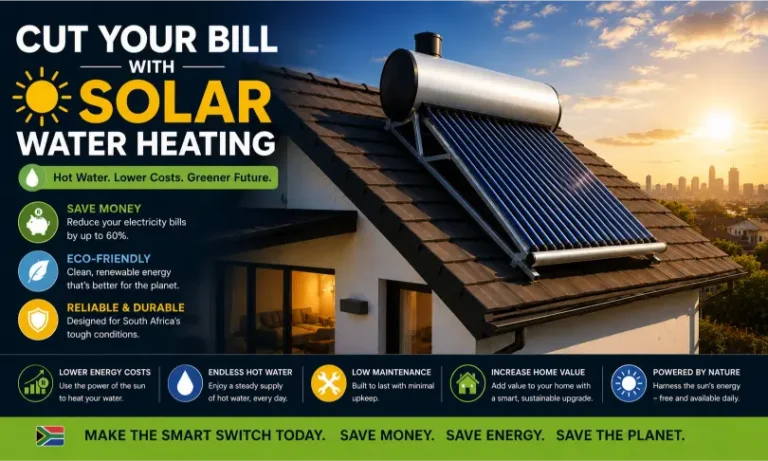
Water heating is one of the biggest electricity users in a South African home, which makes a solar geyser one of the fastest ways to cut your bill. Here is what you need to know about the main options and the safety components involved.
Thermosiphon Systems
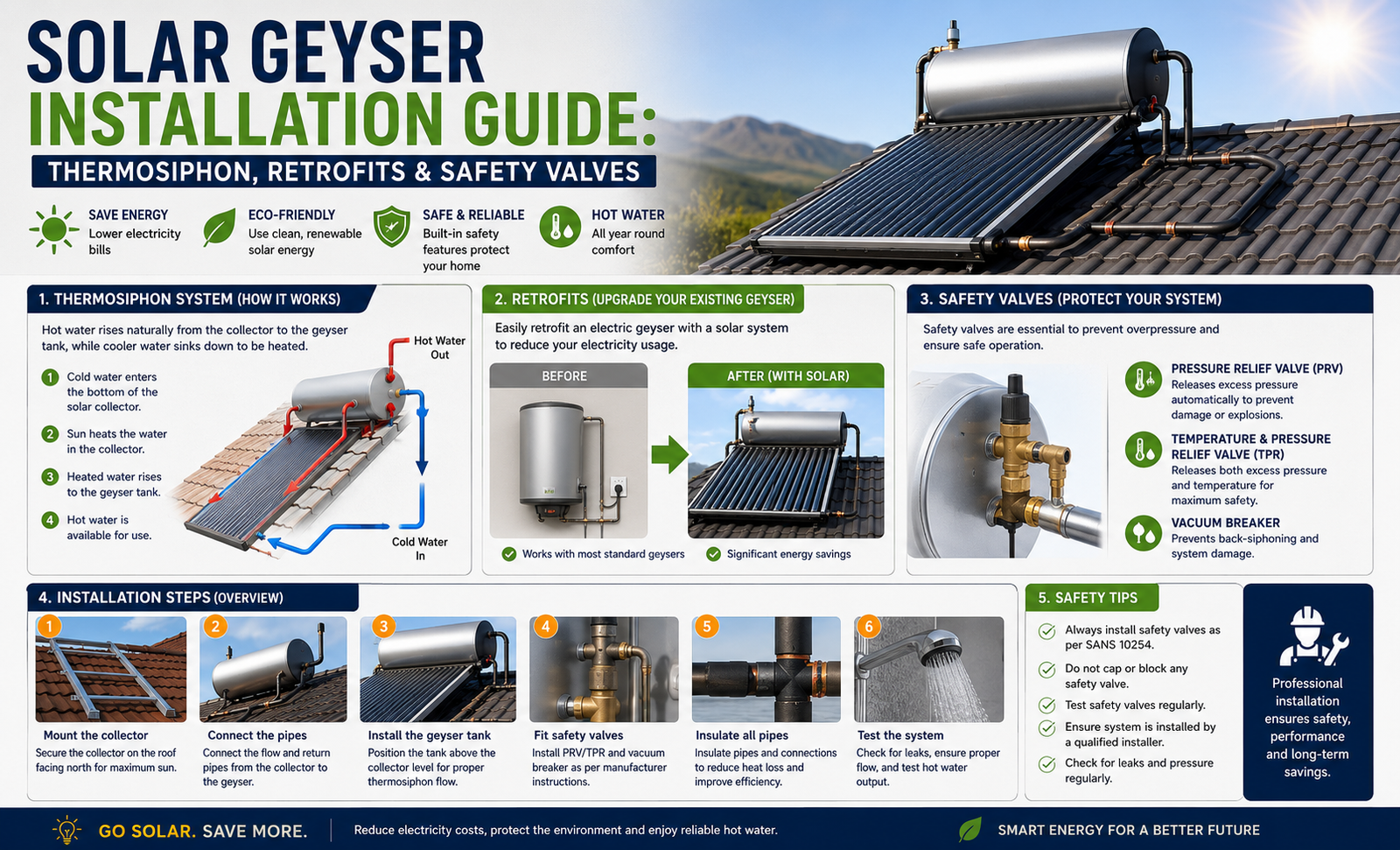
In a thermosiphon (close-coupled) system, the water tank sits above the collector on the roof. Hot water rises naturally into the tank while cooler water sinks to be heated — no pump required. It is simple, reliable and cost-effective, ideal for many homes.
Pumped (Split) Systems
In a pumped or split system, the tank sits inside the roof or at ground level and a small pump circulates water to the collector. This suits homes where a rooftop tank is not practical and gives a neater finish.
Retrofits vs Complete Kits
A retrofit connects a solar collector to your existing geyser, saving cost. A complete kit replaces the geyser with a purpose-built solar system for maximum efficiency. We stock both, plus evacuated-tube and flat-plate collectors.
Safety Valves Matter
Solar geysers get hot, so correct safety components are essential: a temperature-and-pressure (T&P) safety valve, pressure-control valve, vacuum breakers and a tempering valve to deliver safe water temperatures at the tap. Always have installation done to standard by a qualified plumber.
Which Should You Choose?
Your roof, water pressure and budget determine the best fit. Browse our solar water-heating range or ask us to recommend the right system for your home.
Get Expert Help from B&B Solar Power Solutions SA
We supply genuine, warrantied solar power, batteries, inverters and water-heating systems, delivered across South Africa with free delivery on orders over R10,000 (code BBSPS26). Request a free quote or browse our inventory today.